Vecht Handelrond
A Resource Hub for Learning Investment Fundamentals: Vecht Handelrond
Sign up now

Investment education provides insight into how financial systems behave under varying structural conditions. Financial environments are influenced by interactions between institutions, capital movement, and regulatory design. Recognising these interactions enables individuals to interpret financial behaviour as part of a broader system rather than as unpredictable activity.
Learning frameworks often emphasise how internal components interact to shape observable patterns. This includes evaluating different asset types, interpreting institutional roles, and examining how financial activity is distributed across systems. By comparing these elements, learners begin to identify how structural dynamics influence financial environments.
A long term analytical perspective is central to understanding financial behaviour. Focus is placed on examining system adjustments across different phases, evaluating consistency within financial structures, and interpreting how environments evolve over time. This perspective supports a deeper comprehension of how financial systems function within wider economic contexts.
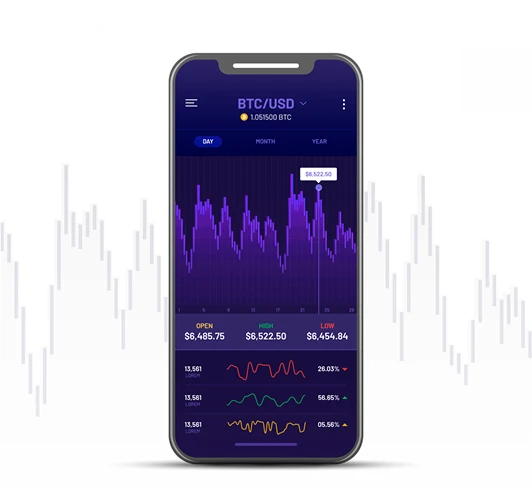
Vecht Handelrond serves as an entry point to structured environments where financial topics are explored through organised educational frameworks. Rather than delivering instruction directly, it connects individuals with organisations that focus on interpreting financial systems and explaining how financial concepts are analysed within formal learning structures.

Through the educational pathways linked by Vecht Handelrond, individuals may encounter organisations that present financial topics using systematic perspectives. These discussions often involve interpreting financial systems, comparing economic structures, and evaluating the mechanisms that shape financial environments. This allows learners to engage with financial topics in a more structured way while recognising that cryptocurrency markets are highly volatile and losses may occur.

Financial education promotes examining how financial systems operate before drawing conclusions about financial activity Vecht Handelrond. Learning environments often focus on interpreting structural influences, evaluating broader economic phases, and understanding how different elements contribute to financial outcomes.
Educational resources connected through Vecht Handelrond encourage individuals to interpret financial information through structured analysis. By comparing different financial elements and evaluating how they interact, learners can approach financial topics with greater clarity. This process supports consistent evaluation and a deeper understanding of financial systems.

Financial education promotes a detailed approach to understanding financial topics by encouraging individuals to break down complex systems into manageable components. Learners begin interpreting how financial systems function by examining their structure, relationships, and internal processes. Educational discussions often explore how institutions operate and how financial frameworks are organised, providing a clearer perspective on financial environments.
Vecht Handelrond introduces individuals to educational organisations that focus on explaining financial topics within structured settings. Rather than acting as a direct source of instruction, it facilitates connections that allow learners to engage with financial systems and economic concepts in a more organised way.
Following initial access, individuals continue their financial education independently by engaging in discussions and reviewing different interpretations. Vecht Handelrond remains a connecting tool, while learners guide their own progress by selecting areas of interest and exploring various financial perspectives. Cryptocurrency markets are highly volatile and losses may occur.
Financial education helps individuals build more reliable judgement when interpreting financial topics. By evaluating how systems operate and how different elements interact, learners move toward more structured and thoughtful conclusions.
Educational discussions support analytical thinking by guiding individuals to interpret financial systems from multiple angles. This includes comparing structures, evaluating interactions, and analysing how financial mechanisms function together.
Financial systems operate within layered economic environments, where broader conditions influence outcomes. Understanding these connections helps individuals interpret financial activity with greater depth and awareness.
Financial learning environments encourage individuals to interpret discussions carefully by evaluating different viewpoints and understanding how various elements contribute to financial outcomes.
Financial awareness develops gradually through continued exposure to structured educational content. The starting phase of this journey is supported by connecting individuals with relevant discussions, allowing them to build stronger understanding over time.
Financial learning resources provide insight into how financial systems operate by breaking down their structure and internal dynamics Vecht Handelrond. Educational content often explores how institutions function, how various assets behave under different conditions, and how economic systems organise financial activity.
Such materials support a systematic approach to interpreting financial topics. Rather than concentrating on isolated developments, learners are encouraged to evaluate how different processes, such as order flow, capital allocation, and system interactions, contribute to overall financial behaviour. This enables a more comprehensive understanding of financial environments.
Educational discussions also highlight the role of careful evaluation when interpreting financial information. Reports, comparative analyses, and structured research present data that can be examined to understand how financial systems respond to different influences. This approach encourages deeper interpretation and more consistent analysis of financial conditions.

Clarity in financial learning often emerges when information is presented in a well organised sequence. Educational structures guide individuals through financial topics step by step, helping them interpret how systems operate and how various elements connect within broader frameworks.
Learning in a gradual sequence allows individuals to develop understanding with greater depth. By interpreting foundational concepts first, learners are better prepared to evaluate more advanced financial topics. This process supports a more accurate perspective on financial environments and the relationships between different financial elements.

Systematic financial learning supports a deeper level of awareness by encouraging individuals to interpret underlying processes instead of focusing on isolated details. Educational discussions typically examine how financial systems are structured, how institutions operate within them, and how financial activity is distributed across broader environments.
Financial topics often involve multiple interconnected elements, including system frameworks, institutional roles, and economic activity. A structured approach helps organise these elements, allowing individuals to interpret each area with greater clarity and focus.
Balanced education introduces different viewpoints to support comprehensive evaluation. By analysing and comparing these perspectives, learners can develop a more complete understanding of financial information.
Structured education provides a framework, but developing financial understanding requires continuous individual involvement. As financial conditions shift, learners must continue evaluating and interpreting information through ongoing study.
Investment education helps individuals interpret how financial systems function and how decisions are shaped within those systems, yet it does not guarantee outcomes or provide definitive answers. Educational discussions often involve examining financial structures, analysing behavioural patterns, and understanding how different environments operate. The focus remains on developing insight rather than certainty.
Through learning, individuals begin comparing viewpoints, evaluating explanations, and interpreting how financial systems operate. This strengthens awareness of decision making processes, although results remain influenced by broader system dynamics beyond educational input.
Financial systems evolve over time as economic phases shift, institutional actions change, and regulatory environments adjust. Education supports the interpretation of these developments, but it cannot remove the variability present within financial environments.

Education supports thoughtful engagement with financial topics by encouraging careful interpretation and structured evaluation. While understanding system behaviour improves perspective, it does not lead to immediate outcomes.
Instead, learning refines the ability to interpret financial discussions and evaluate information with greater depth. This gradual development supports clearer thinking when examining financial concepts and decision processes.
A deeper level of financial understanding forms through continuous learning and reflection. Educational materials provide the foundation, while consistent analysis helps expand awareness over time.

Investment education offers guidance on understanding financial systems, but it does not replace personal decision making. Educational organisations present structured discussions and analytical perspectives, while individuals remain responsible for interpreting and applying that information.
Independent exploration is therefore a critical step in the learning process. Reviewing different viewpoints, analysing financial topics from multiple angles, and consulting qualified financial professionals can support more informed decision making. Financial environments are subject to change, and cryptocurrency markets are highly volatile and losses may occur.
Financial understanding continues to evolve through ongoing engagement. Individuals who study financial systems often deepen their knowledge by examining new perspectives and expanding their analysis. Education provides the starting framework, while continued learning shapes long term understanding.
Early stages of financial education often focus on explaining how investment environments function within broader financial systems.
Beginners typically examine how transactions are carried out, how orders are processed within structured systems, and how financial instruments are exchanged. This helps establish an understanding of investment as a system driven process.

Risk management is a fundamental concept introduced during initial learning. Beginners analyse how exposure can change depending on position size, capital usage, and transaction structure. These discussions highlight the importance of evaluating participation with awareness of potential outcomes.
Another essential concept involves understanding how investment systems operate. Educational discussions explain how sites process activity, match participants within markets, and present relevant financial data. This provides clarity on how investment environments function through organised technological systems.
investment environments are shaped by regulatory systems that establish guidelines and maintain structure. Beginners often explore how these frameworks operate, how compliance is maintained, and how regulatory influence shapes financial activity.
Educational discussions encourage a careful and structured approach to participation. Beginners are guided to interpret financial concepts gradually, evaluate investment environments thoughtfully, and understand the responsibilities linked to financial decisions. This process supports clearer understanding while recognising that cryptocurrency markets are highly volatile and losses may occur.
Understanding financial systems through education can support more measured financial judgement.
By interpreting financial structures, analysing economic phases, and evaluating system behaviour, individuals develop a clearer perspective before making decisions. This approach promotes thoughtful evaluation instead of reacting to immediate impressions.

Market responses often follow the release of economic updates or policy decisions. Adjustments in interest rates, employment figures, or growth projections can influence how financial conditions are assessed, resulting in changes across financial systems.
Financial conditions develop through the interaction of various elements. Institutional decisions, economic signals, and global developments work together to shape outcomes. Analysing these components collectively provides a clearer view of system behaviour.
Studying financial systems allows individuals to interpret how different elements contribute to overall structure and function. By examining economic frameworks, institutional roles, and financial processes, learners can better understand how financial environments develop and how activity is organised within them.
| 🤖 Entry Fee | No entrance fee |
| 💰 Incurred Costs | Free of any charges |
| 📋 Process of Joining | Registration is streamlined and fast |
| 📊 Subjects Covered | Education on Crypto assets, Forex markets, and Investment strategies |
| 🌎 Eligible Countries | Almost all countries are supported except the US |